Types of carpet, explained from the tuft up
The short answer
Carpet comes in three constructions: cut pile (plush, saxony, textured and frieze), loop pile (level loop or Berber, and multi-level loop) and cut-and-loop. Cut pile feels softest, loops wear hardest in busy rooms, and cut-and-loop patterns hide soil. Fibre, density and twist decide how well any of them lasts.
Three familiesCross-sections
What are the main types of carpet?
The main types of carpet are named by how the yarn is finished above the backing. Cut pile has its loops sheared into upright tufts. Loop pile leaves the loops whole. Cut-and-loop combines the two. Every style you will see on a sample rack, from plush to Berber, belongs to one of those three families.
The style name on a sample tells you the construction. The fibre (nylon, polyester, triexta, wool or olefin) is a separate choice, covered in our guide to carpet fibers. A plush can be nylon or polyester; a Berber can be wool or olefin. Keep the two decisions apart and the sample rack gets much easier to read.
How is carpet made?
Most household carpet is tufted. Rows of needles punch yarn through a woven primary backing, forming loops. The loops are either left as they are or cut open by blades. A coat of latex locks the yarn in place, and a secondary backing is laminated underneath for strength and stability.
That is why the same machine can make a plush, a frieze or a Berber: what changes is the yarn, how high the loops are, whether they are cut, and how tightly the yarn was twisted and heat-set beforehand. A smaller share of carpet is woven on a loom, where the pile and backing are made together; woven broadloom is usually a premium product.
Every tufted carpet therefore has the same layers you can see in the diagram on this page: pile on top, primary backing, latex, secondary backing. When an installer talks about delamination, they mean those backings coming apart.
Build each type of carpet yourself
Pick a construction to rebuild the sample. The pile shears flat, the needle bar crosses the backing and the new tufts grow behind it: the same order of work as a tufting machine, slowed down so you can see each type’s shape.
Cut pile
Plush (velvet)
Dense, evenly sheared cut tufts standing straight up, for a smooth, formal surface.
- Wear
- Wears best in low-traffic rooms; the even face crushes visibly where people walk.
- Marks
- Shows footprints and vacuum marks
- Rooms
- Formal living and dining rooms, primary bedrooms
What are the types of cut pile carpet?
The Carpet and Rug Institute lists four cut pile styles: plush (or velvet), saxony, textured plush and frieze. They run from smoothest to most casual. Plush is sheared evenly and shows marks; saxony adds twist; textured mixes tip heights to hide footprints; frieze twists long yarns so tightly they curl over.
| Style | Surface | Footprints | Suits |
|---|---|---|---|
| Plush / velvet | Smooth, even, formal | Shows them | Low-traffic formal rooms |
| Saxony | Dense, twisted tips, refined | Shows some | Living and dining rooms |
| Textured | Uneven tips, soft texture | Hides them | Most rooms in the house |
| Frieze | Long, curled, nubby | Hides them well | Busy, casual rooms |
Shag is a long, loosely constructed cut pile that comes and goes with fashion. It is soft but traps grit and flattens, so treat it as a bedroom or rug choice rather than a hallway one.
What are the types of loop pile carpet?
Loop pile comes in two main forms. Level loop has every loop the same height, giving a flat, tight surface that the Carpet and Rug Institute says holds up well in high-traffic areas. Multi-level loop uses two or three loop heights to draw a pattern. Berber is the everyday name for level loop, often with flecks of colour.
- Level loop. Low, dense and firm underfoot; common in hallways, home offices, basements and rentals.
- Berber. A level or slightly varied loop, usually thicker yarn with flecks. The name describes a look, not a fibre: Berber is sold in nylon, olefin, wool and blends.
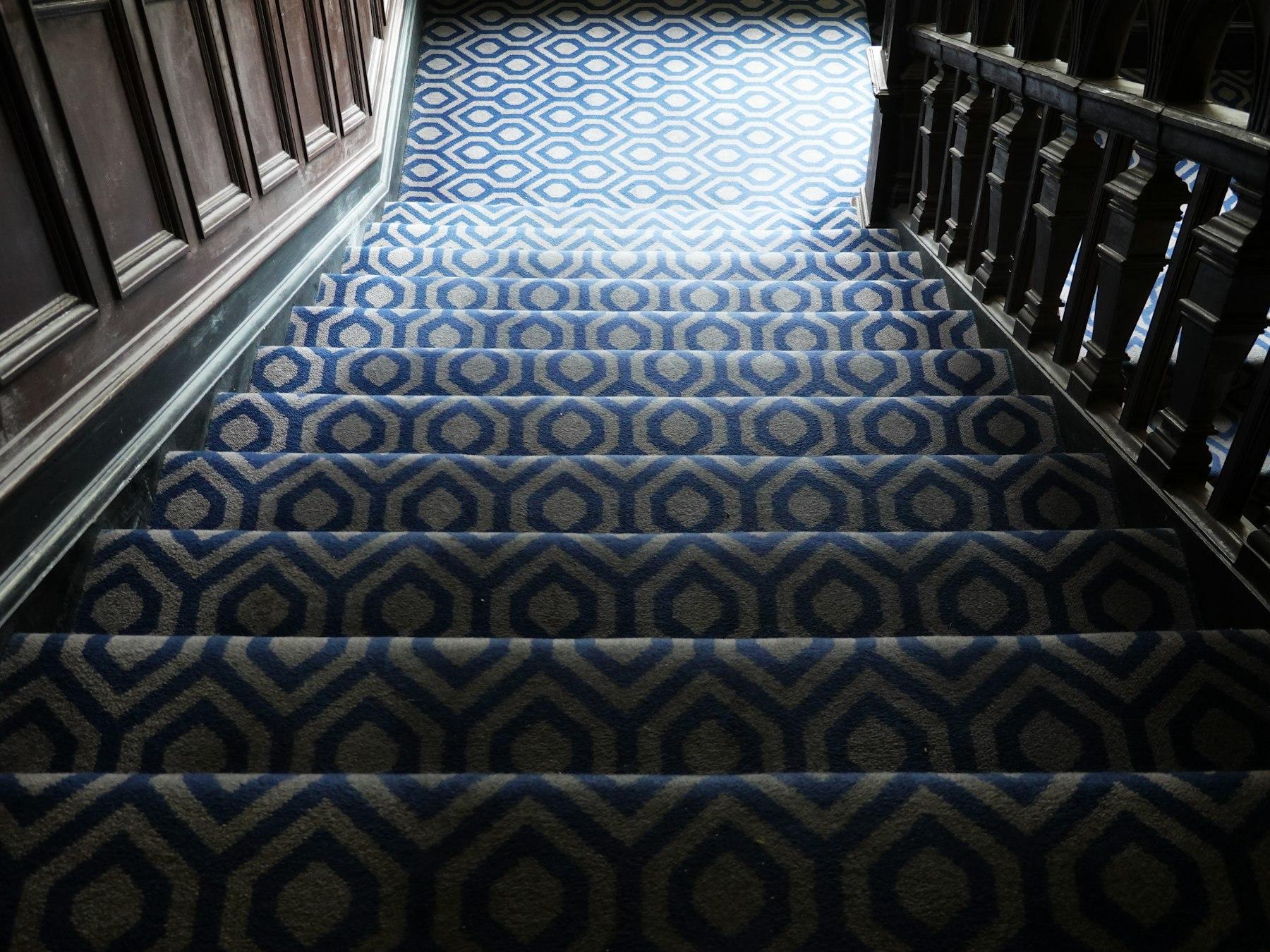
- Multi-level loop. High and low loops make stripes, waves or geometrics. The pattern helps hide wear.
What is cut and loop carpet?
Cut and loop carpet has some yarns sheared into tufts and others left as loops in the same piece. The difference in height and texture draws a sculpted pattern, such as squares, scrolls or diamonds. The Carpet and Rug Institute notes that its varied, often multicoloured surface is good at hiding soil and stains.
Cut and loop suits rooms where people eat and gather. It is less smooth to walk on barefoot than a plush and, like any loop, can snag. Patterned carpets also need extra material to match the pattern at seams, which our carpet calculator lets you allow for.
What is the most durable type of carpet?
Durability comes from how the carpet is built more than from the style name. The Carpet and Rug Institute says cut pile durability depends on fibre, tuft density and yarn twist, that highly twisted yarn holds its shape longer, and that same-height loops hold up well in high-traffic areas.
In practice: compare a dense, high-twist cut pile and a tight level loop in a resilient fibre for your busiest rooms. Two samples can share a style name and differ hugely in density. Our guide to density, face weight and twist shows how to read those numbers from the label, and the right carpet padding matters as much as the carpet.
Which type of carpet is best for each room?
Match the construction to the traffic. Plush and saxony suit formal living rooms and bedrooms. Textured and frieze suit family rooms and most bedrooms. Level loop suits hallways, offices and basements. Cut-and-loop suits dining and family rooms. Stairs want a low, dense pile with a firm cushion.
| Room | Good fits | Think twice |
|---|---|---|
| Bedrooms | Plush, saxony, textured | Rough loops for bare feet |
| Living room | Textured, saxony, cut-and-loop | Plush if it is the main route |
| Family room | Frieze, textured, cut-and-loop | Light plush |
| Hallways | Level loop, dense textured | Long frieze or shag |
| Stairs | Low, dense cut pile or tight loop | Thick, soft pile |
| Basement | Level loop, carpet tile | Anything on a damp slab |
Room by room detail: carpet for stairs, basement carpet and pet-friendly carpet.
Frequently asked questions
By construction, carpet comes in three families: cut pile, where the yarn loops are sheared open into tufts; loop pile, where the loops are left uncut; and cut-and-loop, which mixes both in one carpet to make a pattern. Plush, saxony, textured and frieze are all styles of cut pile, and Berber is a loop.
Level loop carpet, the style most people mean by Berber, holds up well in high-traffic areas, according to the Carpet and Rug Institute. It needs a thin, firm cushion: CRI guidance is no more than 3/8 inch at 8 pounds density. The weakness is snagging, since a caught loop can pull along a row.
Textured cut pile, frieze and patterned cut-and-loop carpets hide footprints and vacuum marks best, because their uneven, twisted or sculpted surface has no single direction for light to catch. A smooth plush or velvet shows every mark, which is part of its formal look.
Both are cut pile. Plush (or velvet) is sheared very evenly with little visible twist, so the surface is smooth and shows marks. Saxony uses yarn with more twist, set by heat, so each tuft tip stays distinct; it still looks refined but hides marks a little better. Textured carpet goes further.
Sources
- 01Selecting the Right CarpetThe Carpet and Rug Institute (CRI)
- 02Types of Carpet & ConstructionShaw Floors
- 03Frequently Asked QuestionsThe Carpet and Rug Institute (CRI)
Checked November 26, 2026. Products, warranties and store services change, so confirm anything important with the manufacturer or retailer. We are independent and not paid by any company named. Read the disclaimer or how we check facts.