The best carpet for stairs
The short answer
The best carpet for stairs is low, dense and tightly twisted, in a resilient fibre such as nylon or wool, over a thin, firm cushion. Avoid thick plush and loose loops, which open up at the nosing. A pattern or heathered colour hides wear on the busiest steps. Decide waterfall or Hollywood before you get quotes.
Why is carpet on stairs harder to choose?
Stairs are the hardest-working carpet in a house. Everyone uses them, often in shoes, and each foot lands on the same narrow strip. The carpet is also bent sharply over every nosing, which stretches the pile open and shows any weakness in density. A carpet that is fine in a bedroom can wear through on stairs in a few years.
When a carpet is bent and the backing shows through between tufts, installers say it is “grinning”. A denser pile grins less. Fold a sample over the edge of a table in the store to see how much backing appears.
What type of carpet is best for stairs?
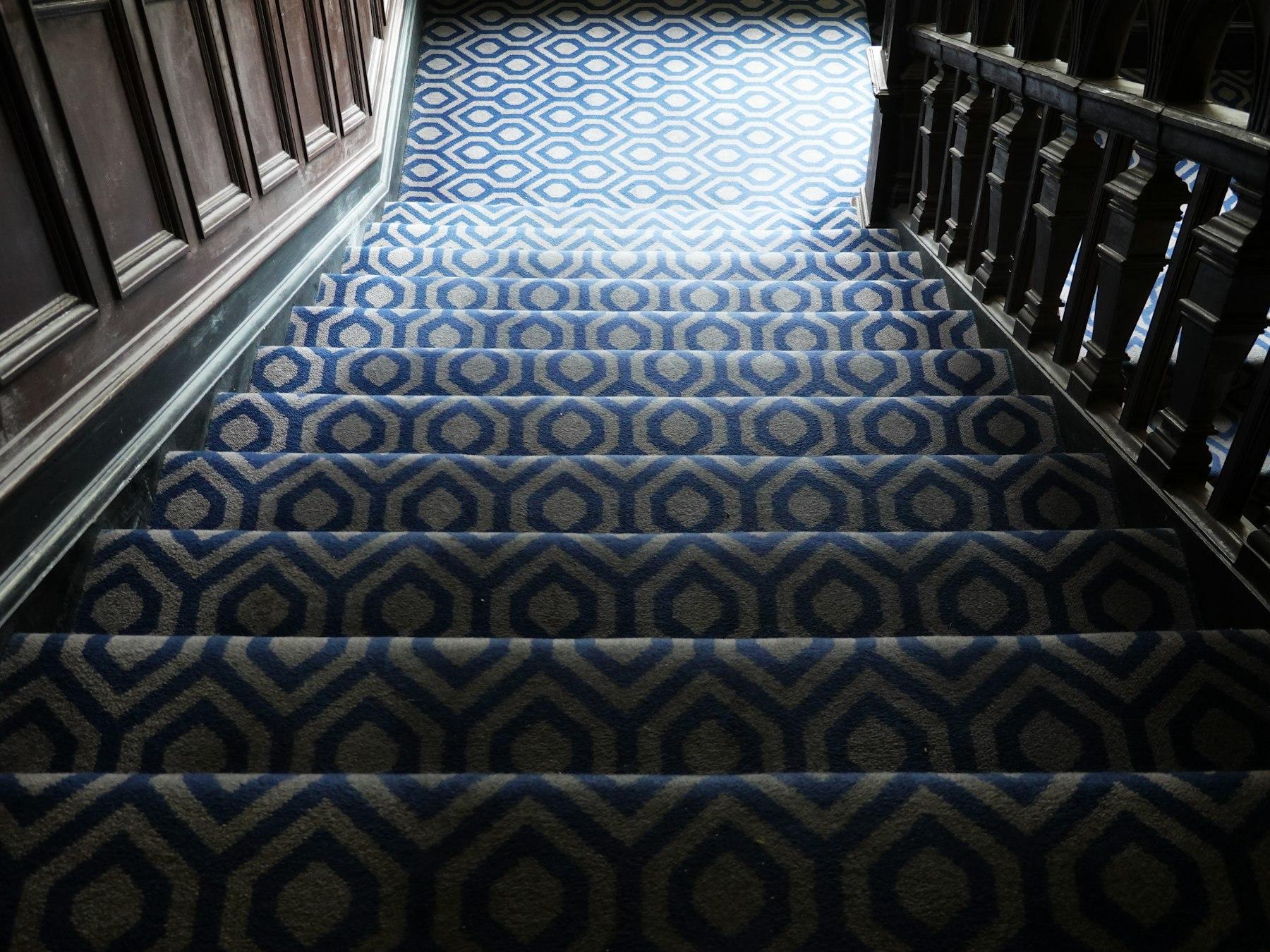
For stairs, choose a low, dense cut pile with high twist, or a tight, low level loop. Nylon is the usual fibre for its resilience; wool is the natural alternative. A heathered, flecked or patterned colour hides wear and soil on the walking line. Avoid long plush, shag and loose, high loops.
| Choice | Good for stairs | Avoid |
|---|---|---|
| Construction | Dense, high-twist cut pile; tight low loop | Shag, long plush, loose loops |
| Fibre | Nylon, wool, dense triexta | Low-resilience fibres in a soft, open pile |
| Colour | Heathered, flecked, patterned, mid tones | Very light solids |
| Cushion | Thin, firm, dense | Thick, soft memory foam |
More on constructions in types of carpet and on yarns in carpet fibers.
What padding should go under stair carpet?
Use a thin, firm, dense cushion on stairs. The Carpet and Rug Institute says heavy-traffic areas, stairs included, want thinner and firmer cushion, within its residential limit of 7/16 inch and no more than 3/8 inch under Berber. A firm pad keeps the nosing crisp and stops the carpet shifting underfoot.
Check the carpet’s warranty for stair-specific cushion rules. Some wear warranties exclude stairs or treat them differently, so read that line before you choose the carpet for a staircase. Full detail in carpet padding.
Should I choose a waterfall or Hollywood stair installation?
Choose waterfall for a quicker, simpler install with a soft, rounded look; choose Hollywood (cap and band) for a tailored finish that hugs each step and shows the shape of the stair. Hollywood takes more time, so it usually costs more labour. Bullnose and open-sided stairs need extra cutting either way.
- Waterfall: carpet falls straight from the nosing to the tread below.
- Hollywood, or cap and band: carpet is wrapped around the nosing and fastened underneath.
- Pile direction: installers usually lay the pile so it runs down the stairs, which wears and looks better.
Should I get a stair runner or wall-to-wall carpet?
A runner covers the middle of the stair and leaves a strip of finished wood showing at each side, while wall-to-wall covers the whole tread and riser. Runners suit attractive hardwood stairs and are easier to replace; wall-to-wall is quieter, warmer and hides worn or unfinished stairs. Both need firm fixing.
Runners are often bound from broadloom carpet to the width you choose, or bought as ready-made runner rolls. Either way, the exposed wood still needs to be in good condition and safe underfoot.
How do I measure stairs for carpet?
For each step, measure the tread depth and the riser height, add them, and add an allowance to wrap the nosing. Multiply by the stair width. Multiply by the number of steps, then add landings separately. Winders and bullnose steps need individual measures. Our calculator includes a stairs line for an estimate.
Stair carpet is usually cut from the roll in pieces, so offcuts are common. Use the carpet calculator for an estimate, and expect the installer’s measure to decide the final amount. Stairs are often priced per step in quotes (reading a quote).
How do I make carpeted stairs safer?
Safe carpeted stairs have carpet stretched tight and fixed firmly at every tread and riser, a crisp, visible nosing, and no loose edges. Choose a low, firm pile and cushion so feet land on a defined edge. Good lighting and a sturdy handrail matter as much as the carpet itself.
Frequently asked questions
A low, dense carpet in a resilient fibre lasts longest on stairs: a tightly twisted cut pile or a tight, low level loop in nylon or wool. Density matters more than thickness, because every nosing bends the carpet and a loose pile opens up there. Pair it with a thin, firm cushion.
A tight, low level loop can work well on stairs, but big, loose loops are a poor choice. Where the carpet bends over the nosing, loops can open up and show the backing, and a snagged loop can run. If you want a loop on stairs, choose a dense one and ask the installer how they will finish the nosing.
No. Stairs need a thin, firm cushion. The Carpet and Rug Institute recommends thinner, firmer cushion for heavy-traffic areas including stairs, within its residential limit of 7/16 inch, and no more than 3/8 inch under Berber. A soft, thick pad makes the nosing feel spongy and lets the carpet move.
On a waterfall install, the carpet runs over the nosing and drops straight down to the next tread, leaving a small gap behind it. On a Hollywood, or cap-and-band, install the carpet is wrapped around the nosing and tucked tight under it, so it follows the shape of each step. Hollywood looks tailored and takes more labour.
Sources
- 01Selecting the Right CarpetThe Carpet and Rug Institute (CRI)
- 02Frequently Asked QuestionsThe Carpet and Rug Institute (CRI)
- 03Types of Carpet & ConstructionShaw Floors
Checked November 26, 2026. Products, warranties and store services change, so confirm anything important with the manufacturer or retailer. We are independent and not paid by any company named. Read the disclaimer or how we check facts.